What the Film Tries to Be
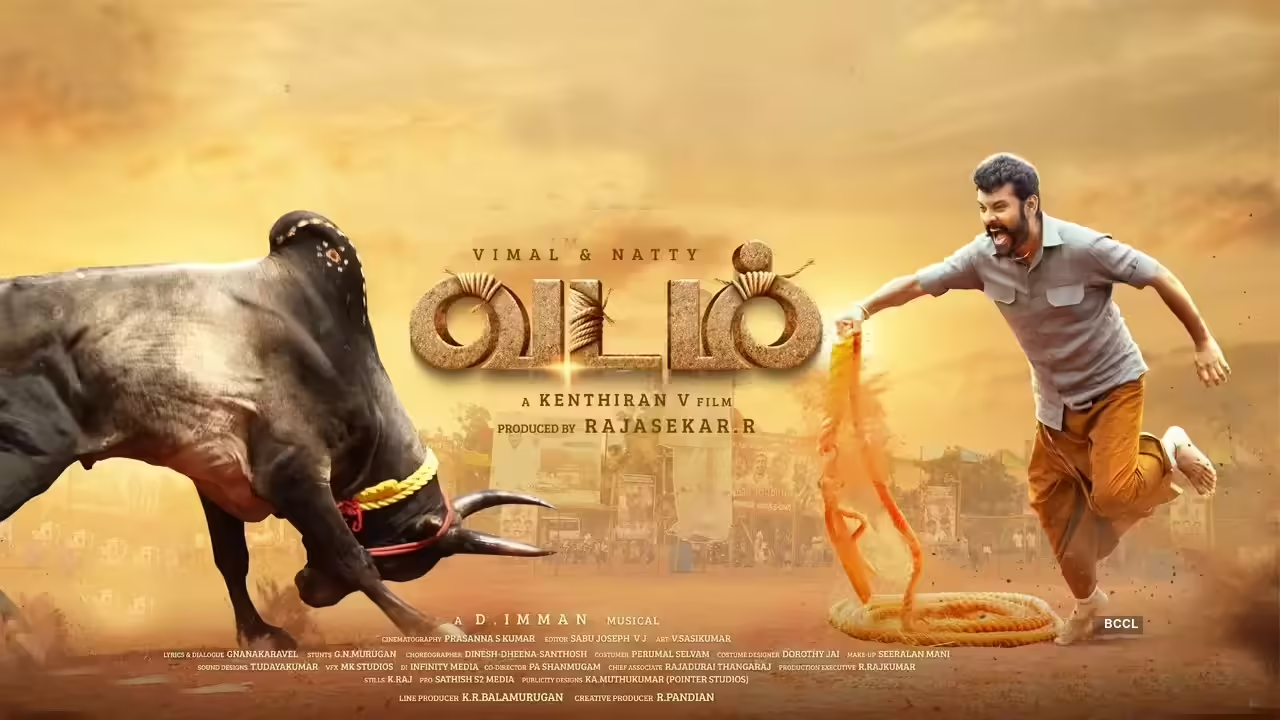
Directed by Kenthiran, Vadam tries to position itself within the familiar rural jallikattu drama genre but with a slightly different approach. Instead of building toward a single climactic bull-taming tournament, the film spreads the rivalry across the entire narrative.
At its heart, the film explores pride, revenge, masculinity, and the emotional bond between man and animal. The story of Vetri and his one-eyed bull Pandimuni becomes the catalyst for a larger family feud and village politics.
Narrative Structure – Where It Falters
The story follows Vetrivel (Vimal), who raises a one-eyed calf rejected by local strongman Rathnavel (Natty). Naming it Pandimuni, Vetri trains the bull into a formidable jallikattu champion that repeatedly defeats Rathnavel’s prized bull.
This rivalry gradually escalates into a violent feud involving stolen cattle, revenge plots, hired killers, and an unsolved murder. The film certainly has plenty of events packed into its narrative—almost enough material for a mini-series.
However, the screenplay struggles to balance these multiple threads. The plot keeps piling on conflicts but rarely allows them to breathe, resulting in moments that feel rushed or emotionally underdeveloped.
Character Utilisation
The characters largely follow familiar rural drama archetypes.
-
Vetrivel (Vimal) – Vimal fits comfortably into the rural hero space and carries the film with his natural screen presence. His bond with Pandimuni provides some of the film’s stronger emotional moments.
-
Rathnavel (Natty) – The antagonist is written mostly as a one-note menace, lacking depth or complexity.
-
Devaki (Sanshka Sri) – Introduced as someone seeking training for her bull, she becomes the romantic interest. Unfortunately, the romance track follows predictable beats and never gains emotional weight.
Supporting actors like Munishkanth and Bala Saravanan play familiar comic roles, contributing little beyond routine humour.
Visual & Technical Merits
One of the film’s stronger aspects is its visual authenticity.
Cinematographer Prasanna S Kumar captures the Sivagangai rural landscape with grit and texture, giving the film a convincing setting. The jallikattu sequences carry some energy, especially those involving Pandimuni.
However, D. Imman’s background score tends to be overly loud and intrusive, often overwhelming scenes instead of enhancing them. Additionally, several songs feel unnecessary and slow down the pacing.
Theme vs Execution
Thematically, Vadam revolves around honour, pride, revenge, and man’s connection with animals. The idea of a rejected bull rising to become a champion is emotionally appealing and easy to root for.
Yet the film surrounds this promising core with generic rural drama elements—ego-driven conflicts, predictable romance, and violence-driven resolutions. While the bull rivalry offers a fresh narrative angle, the surrounding story rarely rises above formula.
Plus Points
-
Emotional core built around Vetri and the bull Pandimuni
-
Vimal’s natural performance suits the rural setting
-
Realistic cinematography capturing village life
-
Slightly different approach to the jallikattu genre
Minus Points
-
Overstuffed screenplay with too many plot threads
-
Predictable romance track
-
Loud and intrusive background score
-
Underdeveloped antagonist and supporting characters
-
Familiar rural drama clichés
Final Verdict
Vadam attempts to bring a fresh perspective to the jallikattu genre by weaving the bull rivalry throughout the narrative rather than saving it for a grand finale. While the emotional bond between the hero and his bull works to some extent, the film is weighed down by formulaic storytelling, excessive plot threads, and dated rural drama tropes.
It is watchable, thanks to Vimal’s performance and the authentic setting, but ultimately leaves little lasting impact.
Rating
⭐ 2.5 / 5
 suresh